DS18B20 vs. NTC Thermistors: The Ultimate BMS Sensor Comparison (2026 Guide)
Jan 15, 2026
Does your BMS need the simplicity of digital or the speed of analog? In the high-stakes world of Battery Management Systems (BMS), choosing the wrong temperature sensor isn't just an inconvenience—it's a safety risk.
This guide definitively compares the Maxim DS18B20 (Digital) against standard 10kΩ NTC Thermistors (Analog) to help you decide which is right for your specific EV or energy storage project.
The Quick Verdict: Which One Should You Choose?
If you are in a rush, here is the immediate answer based on your specific use case. The "best" sensor depends entirely on whether you are building a mass-production vehicle or a DIY prototype.
For Mass Production EVs & ISO 26262 Safety
Winner: NTC Thermistor (e.g., Focusens MFP-2 Series)
Why: They are passive, fail-safe, and offer instant response times (<100ms) crucial for detecting thermal runaway. They are the industry standard for OEMs (Tesla, BYD, VW) due to low cost at scale and AEC-Q200 compliance.
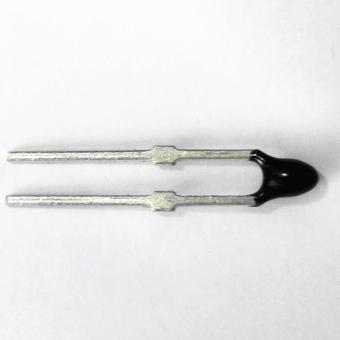
Recommended: Focusens Surface Mount NTCs for robust battery pack contact.
For DIY Powerwalls, E-Bikes & Prototypes
Winner: DS18B20 (Digital)
Why: Unbeatable ease of use. You can daisy-chain 50+ sensors on just 3 wires using the 1-Wire bus. It requires no complex ADC calibration, making it perfect for Arduino/ESP32 based systems where wiring simplicity > microsecond reaction speed.
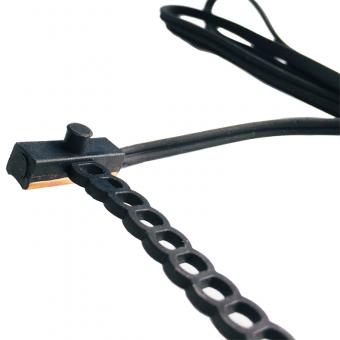
Recommended: Focusens Waterproof Tubular DS18B20 for easy installation.
NTC Thermistor vs DS18B20 Digital Sensor Comparison
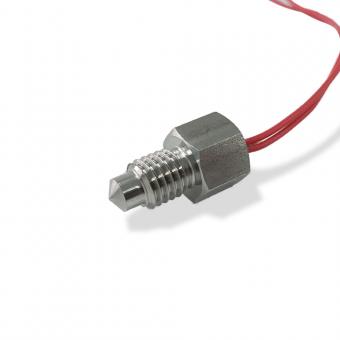
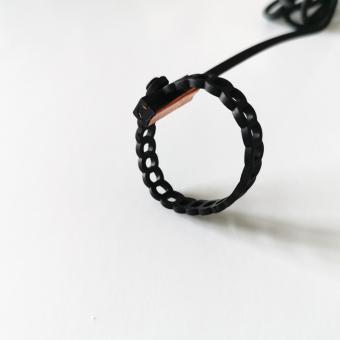
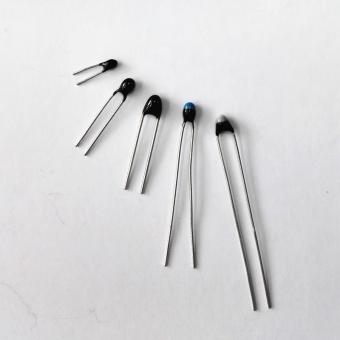
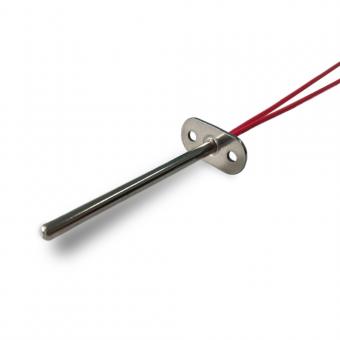
Fig 1. Focusens NTC Thermistor (Left) vs. Waterproof DS18B20 Probe (Right)
Why Trust This Comparison (E-E-A-T)
I am an embedded systems engineer specializing in battery monitoring solutions. This comparison is supported by data from leading sensor manufacturers like Focus Sensing and Control Technology (Focusens), an ISO-certified factory specializing in both automotive-grade NTCs and digital sensing solutions.
This comparison is based on:
Datasheet Analysis: Maxim Integrated (DS18B20) vs. Focusens Automotive NTCs.
Real-world Testing: Stress testing sensor latency during rapid thermal events.
Architecture Constraints: Evaluating microprocessor load (ADC vs. Digital Bus).
At a Glance: Technical Specs Showdown
This table highlights why these two sensors serve different masters.
Feature DS18B20 (Digital) NTC Thermistor (Analog) Winner for EV BMS
Interface 1-Wire Digital (Serial) Analog Voltage (ADC req.) DS18B20 (Simplicity)
Response Time Slow (Max 750ms @ 12-bit) Fast (Instant/Thermal constant) NTC (Critical Safety)
Accuracy ±0.5°C (Factory Calibrated) Varies (Need Calibration) DS18B20 (Out of Box)
Wiring Daisy Chain (Parallel) Individual/Matrix (Star) DS18B20
Cost (Volume) High ($1.00+) Extremely Low ($0.05) NTC
Customization Standard Probes Highly Customizable (Lugs, Threads) NTC (Focusens Specialty)
Round 1: Response Time & Safety (The Critical Factor)
In an Electric Vehicle, the BMS has one primary job: Prevent Thermal Runaway.
The NTC Advantage
An NTC (Negative Temperature Coefficient) thermistor is a passive resistor. As temperature changes, resistance changes—instantly.
The Scenario: If a battery cell vents hot gas, an NTC will reflect that spike immediately. The BMS can cut the contactor in milliseconds.
Focusens Solution: The MF5A and MFP-2 series are designed with low thermal mass tips, ensuring they catch rapid temperature spikes faster than encased digital sensors.
The DS18B20 Limitation
The DS18B20 is an active integrated circuit. It must "read" the temperature and then "convert" it to digital data.
The Bottleneck: At its highest resolution (12-bit), the DS18B20 takes up to 750ms to perform a conversion.
The Risk: In a catastrophic failure, 3/4 of a second is a lifetime. For high-performance EVs, this latency is often unacceptable.
Verdict: If safety depends on microsecond reaction, NTC wins.
Round 2: Wiring Complexity & Implementation
This is where the DS18B20 shines and why the DIY community loves it.
The "Spaghetti" Problem (NTC)
Imagine a battery pack with 96 cells. If you use NTCs, you need nearly 200 wires running back to the BMS or complex Multiplexers. This creates a heavy wiring harness.
The 1-Wire Solution (DS18B20)
The DS18B20 uses the 1-Wire bus protocol.
Each sensor has a unique 64-bit serial code.
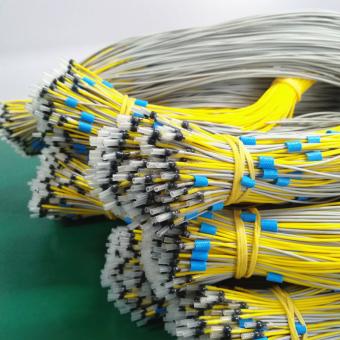
Focusens Advantage: Focusens offers pre-assembled DS18B20 cable harnesses where sensors are spaced exactly to your cell pitch, allowing you to monitor 50+ points with just 3 wires connecting to your master controller.
Verdict: If you hate wiring or have limited GPIO pins, DS18B20 wins.
Use Case Scenarios: Which Profile Are You?
Scenario A: The Professional EV Architect
Goal: Designing a 400V/800V traction battery for a road-legal vehicle.
Choice: NTC Thermistor (Focusens MFP-2 / MF5A).
Reasoning: You cannot risk the 750ms latency of the DS18B20. You need components that meet AEC-Q200 standards.
Why Focusens: They offer Ring Lug (MFP-2) and Screw Threaded NTCs that mount directly to busbars or cooling plates, ensuring the best thermal coupling for professional packs.
Scenario B: The DIY Powerwall / Home Storage
Goal: Recycling 18650 laptop cells into a 48V home battery.
Choice: DS18B20 (Waterproof Probe).
Reasoning: You are using an Arduino or ESP32. You prioritize easy assembly.
Why Focusens: Their Stainless Steel Tubular DS18B20 probes are robust, waterproof, and come with customizable cable lengths, perfect for burying inside a battery module.
FAQ: Common Questions about BMS Sensors
Q: Can I get custom cable lengths for my battery pack?
A: Yes. Manufacturers like Focusens specialize in custom wire harnesses. Whether you need NTCs spaced 5cm apart or a 3-meter DS18B20 probe, they can manufacture it to your exact drawing.
Q: Is there a middle ground?
A: Yes. For some applications, Digital Output Modules or specialized ICs are used. Focusens also supplies other digital sensors like TMP117 if you need I2C interface instead of 1-Wire.
Final Thoughts: Sourcing Your Sensors
The battle between DS18B20 vs. NTC isn't about which sensor is "better" in a vacuum—it's about System Architecture.
Go NTC for safety-critical, high-volume, and professional automotive designs.
Go DS18B20 for DIY, prototyping, and ease of installation.
Ready to build? Don't risk your battery pack with generic, uncalibrated sensors.
Check out Focusens' EV Battery Sensors Catalog
View NTC Thermistor Options | View DS18B20 Digital Probes
Disclaimer: This article is for educational purposes. Always adhere to local safety standards. Focusens is a registered trademark of Focus Sensing and Control Technology Co., Ltd.







 +86-551-69109668